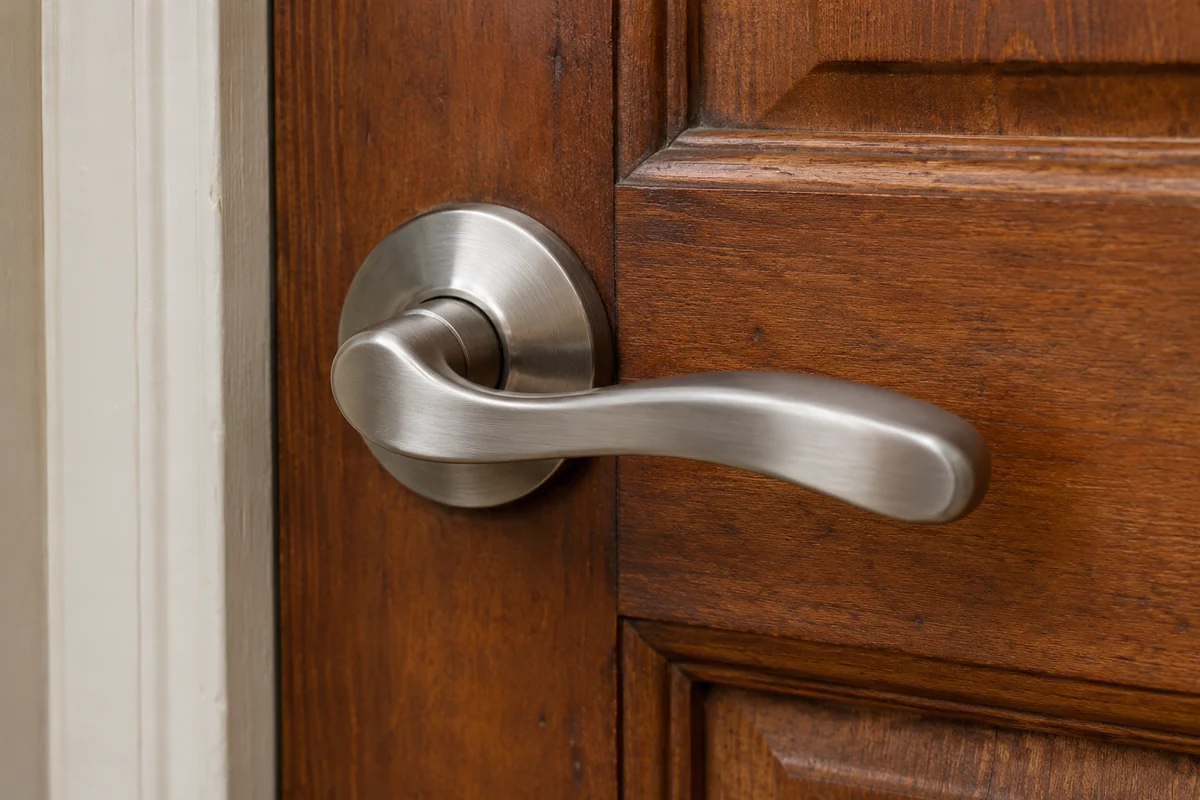
You turn the key, pull the door toward you and try again. That small workaround is useful information. Describe it when you call 410-657-4174 about lock repair in Pikesville, MD.
A short history is more useful than a guessed diagnosis
Say how long the behavior has been happening and what you have to do differently. Does the key turn with the door open? Does the bolt catch only after closing? Has the handle become loose, or does a key appear damaged? These observations help describe the problem without deciding the repair before assessment. A change that happens only occasionally is still worth describing, including the circumstances when you notice it.
Avoid repeatedly forcing the key or slamming the door to make it secure. If you cannot enter, discuss emergency locksmith availability. If the opening cannot be locked, make that clear at the start of the call.
Door, frame and lock belong in the same conversation
The lock operates within a larger entrance. A fault may involve the cylinder, latch, mounting or the way the door meets the strike. Ask what needs checking and why the proposed work addresses the symptoms. Replacing a part should have a reason tied to the condition found.
For a Sudbrook Park home, describe the actual door and hardware rather than assuming the neighborhood's history identifies the lock. Along the Reisterstown Road business corridor, identify whether the affected opening is a public door, staff entrance or shared building door.
Compare the outcomes
If the lock operates normally and the concern is an old key, rekeying may address access control. If the mechanism is damaged or unsuitable, replacement may be discussed after assessment. Some requests involve both an operating fault and a change of keys.
Repair: address the operating problem identified.
Rekey: change which key operates suitable existing hardware.
Replace: change hardware when the assessment supports that approach.
Make the agreed work easy to review
A clear scope matters whether you are planning residential work or requesting help for a commercial entrance. Identify who can approve the work and arrange access to the particular door.
Use the pricing checklist to ask about attendance, labor, parts and other charges. If assessment changes the proposed work, review the revised total first. Afterward, check normal closing, locking and key operation. Our shared-keys guide helps organize who receives any new keys.
If the behavior changes with the way you close the door, describe that pattern. You do not need to repeat a difficult action for demonstration while waiting. A clear account of ordinary use is enough to begin the discussion.